April 3, 2009

Photography For New Birmingham Area construction

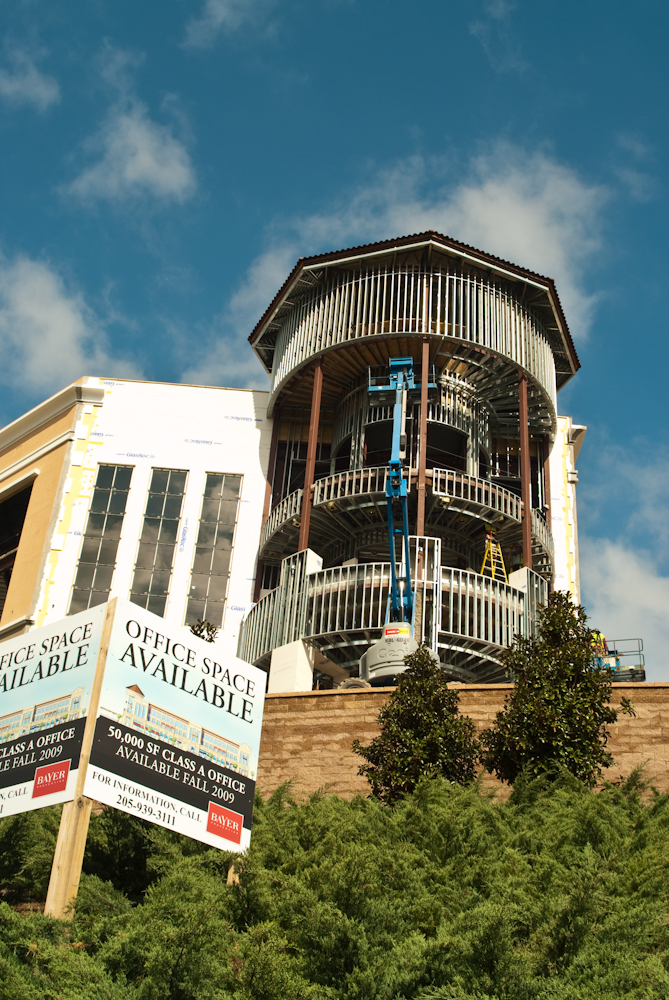
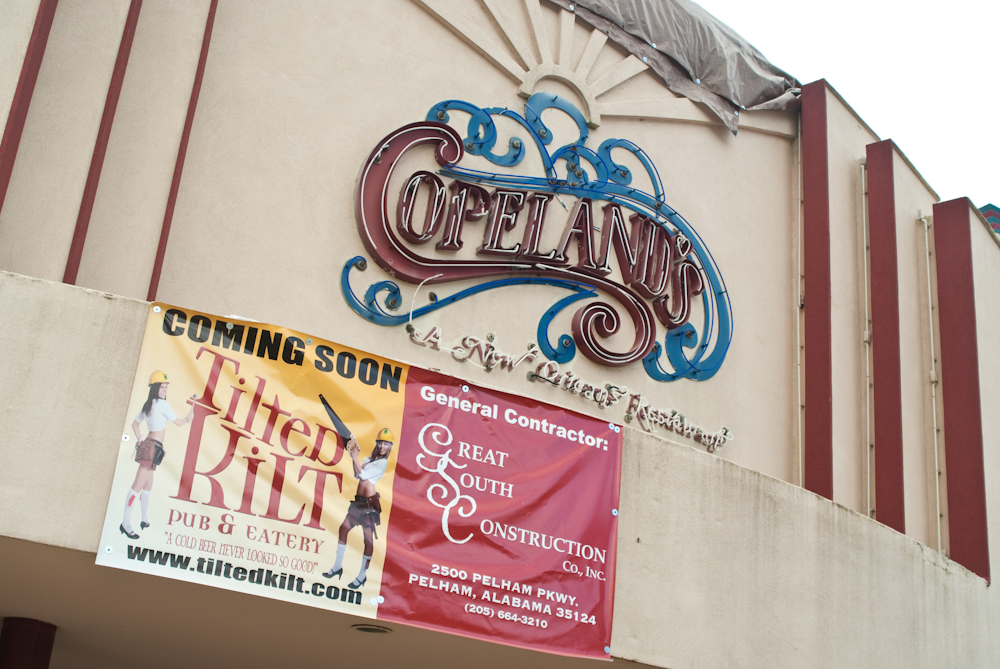
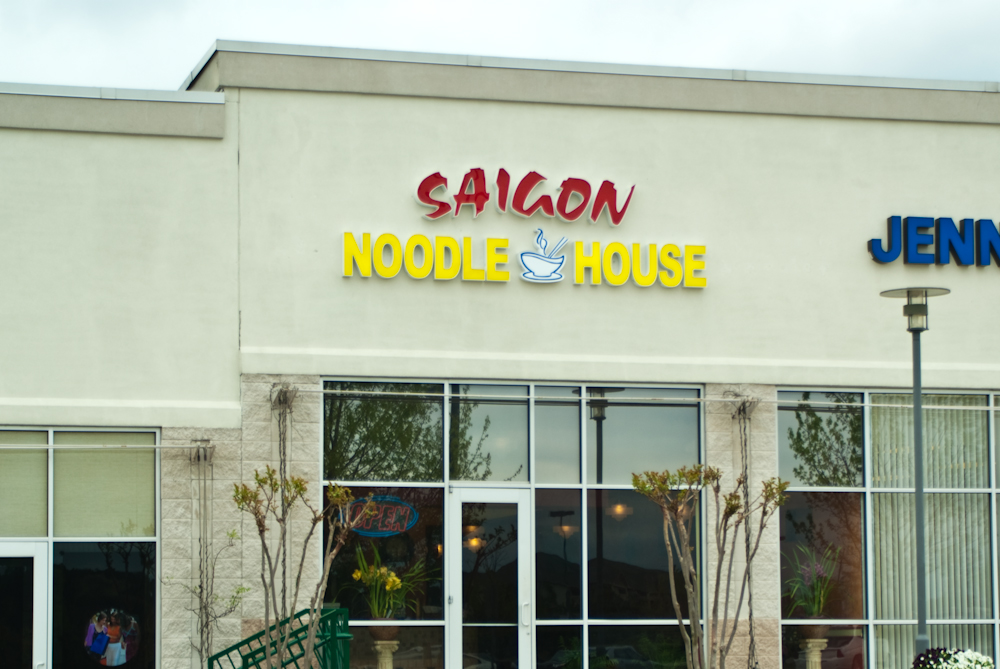
Today I just wanted to share some of my recent photography I've been doing for The Terminal and new construction on Highway 280. Nothing too techy, just showing how you can use photography to show people about new stuff going on in the city.

Contrary to popular opinion, Birmingham's restaurant economy is doing great. I see it with our sales (and wait times) at The Cheesecake Factory to packed out parking lots at the new Surin West (on 280) and some of these new restaurant openings in the area (click on the picture for full size on Flickr):


New construction at The Summit on Hwy 280


New construction for a Tilted Kilt in the old Copeland's building on 280.


Saigon Noodle House in the Best Buy / World Market shopping center on 280.

For the full stories, check out our blog The Terminal about all things Birmingham and be sure to subscribe to make sure you stay updated on insider information and goings-on in Birmingham.

March 27, 2009

Google Apps and Working in the Cloud (Part 2)

As some of you may know, I got my new Dell Mini 9 Netbook a few weeks ago from Dell. My new project is to move as much of my work and productivity schedule to an online format (cloud), not on my computer. The reason for this is that I have a super small solid state hard drive (8 Gig), so I can't store music, photos or much else on my hard drive, but I can store, use and point to these items in "the cloud". The new terminology for this is "working in the cloud". The cloud refers to applications that run on the Internet such as Google Calendar and Google Docs. Google actually has a whole host of cloud applications that you can use to "mobilize" your life. These applications can then be accessed by you or anyone that you share them with.

Here are some places you can go to for cloud usage and storage:
All of the above are completely free cloud sharing and storage utilities that are sponsored by ads (so free for you!). Cloud computing is becoming more and more popular as smaller devices like netbooks, smartphones and other small smart devices are introduced.

With the above positive benefits of cloud computing comes a warning. Many if not most of the cloud applications in use now are not 100% secure. So, use with caution. Don't leave sensitive financial (credit, bank, investment accounts) or private information (where you live, phone #s, addresses) in the cloud. These sites can be hacked just as easy as an email account or website. There hasn't been any major problems or leaks so far, but just use these sites with caution. Always have a backup somewhere and keep financial and personal information locked and encrypted on a physical drive. Other than that, enjoy the cloud!

(photo by mansikka on Flickr)

March 13, 2009

Creating An Epic Soundtrack

This week I collaborated on a short film for a friends team with the Sidewalk Scramble, 48 hour short film making contest. Suction Horse Productions (my production company) couldn't sponsor a team this time like we usually do, so I helped my friends Kenneth and Kim with their team by creating the soundtrack and some foley sound for the short film. I wanted to share with you guys how I created the main track, what gear and software I used and my creative process for creating a soundtrack score song.

Inspiration

The first thing you need to have in order to create a soundtrack piece is not only your own musings or personal inspirations but the inspiration behind the film and all the main characters' inspiration and back stories. More specifically:
  • Watch the final draft of the film to get a sense of the "tone" of the film. Is it dark / film noir? happy and colorful?, funny and lighthearted?, serious or emotional? These tones play a huge factor in how the music forms in your head.
  • Consider the main character's back story and their mood. What attitudes are they bringing to the story?
  • look at the locations, are they grungy, clean, industrial, folksy, rural, urban? Use instruments that bring to mind these locations...

Instruments and recording software


As a music writer or composer you must have at least a basic knowledge of recording and a few musical instruments at your disposal. Some of these may include:
  • A fairly modern computer / laptop with a good amount of memory
  • digital multi-track recording software. On the high end: ProTools, Cubase, or Cakewalk / Sonar (there are many other cheap or free digital recording tools available also. Just Google :-)
  • or a software synthesizer / sampler like Native Instruments KONTAKT, Propellerhead Reason
  • an instrument that plays your music: Guitar and piano are the most popular analog instruments, or a nice MIDI or standalone keyboard for your syth / sampler software
  • a microphone (preferably a condenser mic) for recording foley or analog audio.
  • a pair of decent speakers or headphones to listen to playback

Steps to create your score:

  1. Use your inspirations (above) to form a basic rhythm and verse / chorus structure melody.
  2. add bass line and drums
  3. add harmonies and tones using your inspirations
  4. consider "featuring" an instrument to signify a character or location in the film
  5. consider adding sound effects or interesting / ethnic rhythmic patterns
  6. layer alternate instruments or orchestra pieces but don't drown out your main melody. Enhance the original melody with layering.
  7. listen to the rough draft. Is there anything you can perfect or fix? Does the featured instrument stand out.
  8. Do a final mix using panning, EQ, compression, reverb or whatever other studio tricks you have available to you in your recording software.
  9. burn the final mix to .WAV or .MP3 so the editor can easily "slice and dice" your precious soundtrack into the essential pieces that he needs to accent the film.

Of course the technical details about digital recording and songwriting are beyond the scope of this blog, but I hope this helps out those of you who are looking into moving into film scoring. Enjoy!

Photo by PeteWright on Flickr

March 5, 2009

Finding Your New Netbook And Why Dell Is Winning


So, probably by now you've heard about the "netbook" revolution going on right now. Netbooks are sub-mini laptops ranging in size from 8-12 inches and usually under 1 inch width. Most Netbooks weigh in at around 2-3 pounds and fit in the palm of your hand. Most of them run on Intel's new Atom processor designed for small size and low power consumption:
Newly designed from the ground up, 45nm Intel® Atom™ processors pack an astounding 47 million transistors on a single chip measuring less than 26mm², making them Intel's smallest and lowest power processors.¹ All this while delivering the power and performance you need for full Internet capabilities.
(from Intel's website)
So, I finally took the dive and ordered the new Dell Mini 9 last week. It should be arriving next week and I'll have a full review and pictures here on The Horse for your enjoyment. In the meantime I'll give you guys some of my top contenders that were around $300 that I was looking at before I decided on the Dell Mini 9.

  • Asus Eee PC 1008HA (Shell)
  • MSI Wind U123
  • Acer Aspire One
  • HPMini 1000

In the end I decided on the Dell Mini 9 because my experience with Dell has always been great and they continue to put out great cutting edge gear and delivering top notch customer service. I felt confident that I could easily get a hold of Dell and get easy support if needed. The other reason I decided to go with Dell was that they took the chance on open source technology, mainly pre-installing Ubuntu Linux on most of their new Mini line of netbooks instead of continuing to feed Microsoft more money. I appreciate that option as I've been moving toward more and more open source software recently. (ie. OpenOffice, Firefox, Thunderbird). It also didn't hurt that Dell had a discount day and I got my Dell Mini 9 for $199 (plus some minor upgrades ;-).

So, now I'm making the jump to Linux. Ubuntu 8 more specifically. I'm going to introduce you guys to Ubuntu and show you some cool features of this new OS here on The Horse starting later next month. Maybe I'll even do some simple tutorials and show you some of the cool things that Linux can do that Windowz can't.

(photo by Jeff Coleman on Flickr)

February 27, 2009

Is America Losing Its Heroes?


A recently found copy of Action Comics #1 was put up for auction today by Metropolis Collectibles, on the online auction site ComicConnect.com. Only about 100 copies of the first Superman comic are in existence and most copies of Action Comics No. 1 in "fine" condition go for about $126,000 at auction, but this one is expected to go for much more according to an AP story on MSNBC Today.com.

Hero

Heroes are honest human beings who didn't intend to be heroes but even without thinking about it, just take action for others when it's needed.

It takes a brave man to stand up for himself,
But it takes a braver man to stand up for someone else.

Someone who knowingly recognizes the risk that he or she faces in carrying out a certain course of action but still goes ahead and does it, purely for the common good.

Someone who sees what needs to be done and willingly does what others will not while expecting nothing in return.
Quotes from WWII Forums members (members are WWII vets or family/friends of vets)

I would consider these people to be a reliable source of knowledge on heroism and who we should consider heroes.

Is America losing its sense of who and what is a hero?
The liberal media is painting Obama and the Clintons as Heroes. But would you say that Obama meets the above definition of a hero?

Some discrepancies in my opinion would be:
  • Obama doesn't recognize the risk that he is taking and how it will impact future generations or he DOES recognize the risk and doesn't care.
  • To me Obama is trying too hard to "look like" a hero by trying to please too many groups, and people at time and in effect pleasing no one and bringing more government control and spending to the picture.
  • Saying one thing and doing another by saying he opposes earmarks and pretending to be fiscally responsible, and then passing the most fiscally irresponsible bill in American history.
These are just some of the major points against Obama's stimulus package, but I didn't really want to turn this into a political blog. I wanted people to start thinking about who we as Americans look up to and why.

Some of my heroes are people of compassion that help and give without expecting anything in return. Missionaries, (some) religious leaders and pastors. People that genuinely care about souls and lives instead of their own personal gain. I think that we can compare Superman's characteristics with what a hero should be these days...

Characteristics of a Superman Hero:
  • work in disguise
  • come from humble upbringings
  • don't brag about their accomplishments
  • save lives
  • defends the innocent
  • makes the right decisions when tough decisions need to be made
  • takes action when called upon
Let's make sure we have the right perspective before we heap praise upon our perceived heroes.
Now go bid on that Action Comics #1!

(Photo by Dunechaser from Flickr)

February 23, 2009

Best Book to Movie Adaptations

Valerie Thomas: I guess we thought that maybe Susan Orlean and Leroche could fall in love, and...
Charlie Kaufman: Okay. But, I'm saying, it's like, I don't want to cram in sex or guns or car chases, you know... or characters, you know, learning profound life lessons or growing or coming to like each other or overcoming obstacles to succeed in the end, you know.
I mean... The book isn't like that, and life isn't like that. You know, it just isn't. And... I feel very strongly about this.
~ (from the 2002 film Adaptation staring Nicolas Cage
and Meryl Streep)
I love this quote from Adaptation because it embodies the struggle that screenwriters go through in adapting a book to a film. I've attempted an adaptation before and it was alot harder than I thought it would be. You can't just pull chapters verbatim from the book and set them in scenes. So much more goes into an adaptation, like:
  • the emotion that the character will convey
  • establishing the background for a character
  • conversion into a classic three act type structure
  • making the screenplay dummy proof (suitable for the common man) with appropriate exposition and establishing scenes without spelling everything out and ruining the mystery or storyline.
  • worrying about writing "Spec" (technically correct and easily sellable to Hollywood) so you won't be made fun of or rejected outright.
  • worrying about how close you should stick to the classic three act story structure and Campbellian Monomyth
There are definitely more issues that screenwriters have to deal with but those would be beyond the scope of this blog. (Hopefully I haven't lost most of you by now ;-).

To move on, I've been reading adaptations for a long time and they are some of my favorite types of books. I just love comparing the differences in the film and the book and then finding the hidden story lines and subplots that didn't make it into the film adaptation. So, as promised, here are some of my favorite adaptations:

Next time you go watch a new movie, check and see if its an adaptation then pick up the book. Result=increased enjoyment!

(photo by Andrei Z from Flickr)

Josh Self is the writer and editor for The Horse, The Wedding PhotogBlog, Storycrafter, and a writer for The Terminal, Birmingham's most popular hyper-local blog. He always watches the movie first and then reads the book...